
LTR meaning in text refers to “Long-Term Relationship,” an abbreviation people use to describe a serious, committed romantic partnership built for the future rather than a short-lived fling. You’ll find it most often on dating apps, in casual text messages, and across social media, where it acts as quick shorthand for real relationship commitment.
Here’s what makes this small acronym worth understanding: a single term like LTR can instantly change how a conversation unfolds. On a dating app, typing those three letters sets clear expectations before two people even meet, saving both time and heartbreak. That kind of efficiency is exactly why the term spread so fast across texting culture.
This guide covers everything you need to read LTR correctly, no matter where you see it. You’ll learn its most common meaning, the lesser-known definitions tied to real estate and design, and simple tricks for telling them apart using context alone. By the end, you’ll never second-guess this acronym again.
What Does LTR Mean in Text?
The Quick Answer
In most texting and online contexts, LTR stands for “Long-Term Relationship.” People use it to describe a serious, committed romantic partnership — the opposite of a casual fling or a short-term arrangement. You’ll see it most often on dating apps, in text messages between friends discussing their love lives, and across online chats and relationship forums.
But that’s not the only meaning. Depending on the platform and the topic being discussed, LTR can also mean Left to Right (a design or language term), Long-Term Rental (a real estate term), or even just Letter or Later, depending on who’s typing.
Why One Acronym Has Several Meanings
Internet abbreviations get recycled constantly. As texting shorthand evolved, people started reusing short, easy-to-type letter combinations across completely unrelated industries. That’s why LTR shows up in a dating app bio, a property listing, and a graphic design tutorial — three different worlds, one shared acronym. The trick isn’t memorizing every possible meaning; it’s learning to read the context around it, which is exactly what this guide will teach you to do.
LTR = Long-Term Relationship (The Most Common Meaning)
When people search for LTR meaning, the overwhelming majority are asking about its romantic definition. In the context of dating and relationships, LTR describes a committed relationship built for the long haul — not a weekend fling, not a “let’s see where this goes” situation, but a genuine, lasting partnership with real relationship commitment behind it.
Where This Meaning Comes From
The phrase “long-term relationship” has been part of everyday English for decades, describing any romantic partnership expected to continue indefinitely. As texting and instant messaging took off in the 2000s, people naturally shortened frequently used phrases to save keystrokes. Long-term relationship — a phrase people typed constantly while discussing dating — was a prime candidate for abbreviation. By the time dating apps like Match.com, and later Tinder, Bumble, and Hinge, became mainstream, LTR had already settled into everyday texting shorthand.
What It Signals About Someone’s Intentions
When someone uses LTR to describe what they’re looking for, they’re communicating something specific: they want relationship goals centered on stability, exclusivity, and a future together, not casual dating. This single acronym often does the job of an entire paragraph. Saying “looking for an LTR” instantly tells a match or a friend:
- They’re not interested in casual hookups or short-term flings
- They want emotional investment and exclusivity
- They’re thinking about the future, not just the next few weeks
- They expect the relationship to involve real effort and consistency
This is why the term carries so much weight on dating apps specifically. It functions as a filter — a fast way to signal dating intentions before either person invests real time.
How LTR Shows Up in Real Conversations
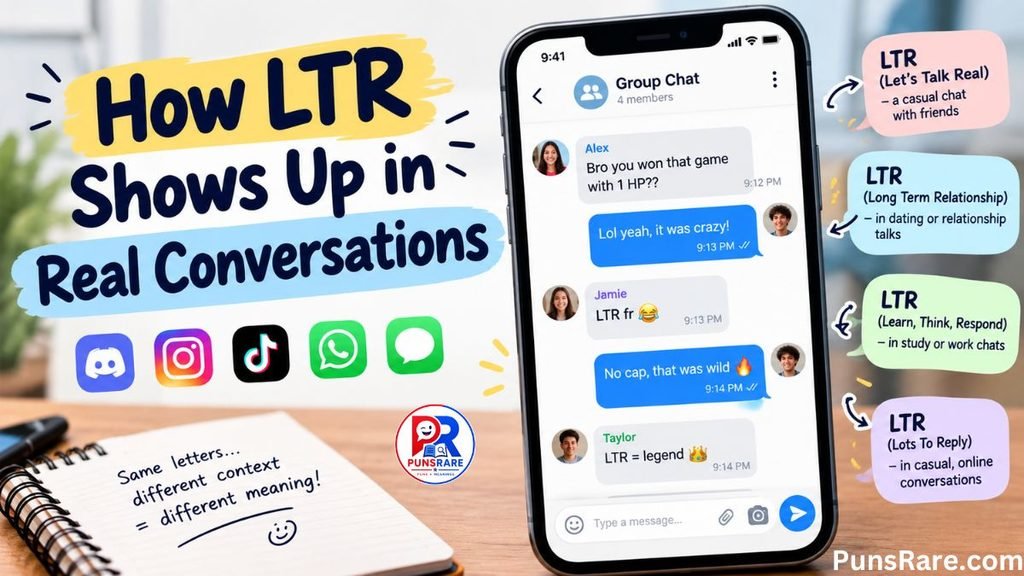
Context is everything with an acronym like this. Here’s how LTR typically appears across the platforms where people actually use it.
On Dating Apps (Bios, Matches, and Opening Messages)
Dating profiles are probably the single most common place you’ll encounter LTR. Apps like Hinge, Bumble, and Tinder all include a “what are you looking for” prompt, and LTR is a frequent shorthand answer.
Example dating app bio:
“Not here for hookups — looking for an LTR with someone who shares my love of hiking and terrible puns.”
Example opening message:
“Hey! I noticed we’re both looking for an LTR. What does that look like for you?”
On these platforms, LTR works almost like a filter tag. Someone scanning profiles for serious dating will specifically look for it, while someone seeking something casual will usually skip past those profiles entirely. It saves both people time by setting dating intentions upfront.
In Texts Between Friends
Outside of dating apps, LTR shows up constantly in SMS conversations between friends catching up on each other’s love lives.
Example text exchange:
Friend 1: “So how’s it going with Alex?” Friend 2: “Really good actually. I think this could turn into an LTR.” Friend 1: “Finally! You’ve been talking about wanting something real for months.”
This kind of casual, friend-to-friend usage is where LTR feels most natural — it’s quick, familiar shorthand between people who already understand the context of each other’s dating lives.
In Online Relationship Communities
Reddit threads, relationship advice forums, and online chat rooms dedicated to dating and relationships use LTR heavily, often alongside other relationship acronyms. In these spaces, people frequently ask questions like “Is this relationship heading toward an LTR or is it just casual?” — using the term as shorthand for a serious, defined relationship status rather than an ambiguous “talking stage.”
On Social Media Captions and Comments
On Instagram, TikTok, and X (formerly Twitter), LTR appears in captions, comments, and social media posts about relationships and dating culture. A caption might read: “3 years into our LTR and still going strong 🥰,” or a comment thread discussing dating trends might reference LTR as shorthand for the broader concept of committed, monogamous partnerships versus casual dating culture.
Other Common Meanings of LTR
While long-term relationship dominates in dating contexts, LTR carries several other legitimate meanings depending on the industry or topic. Here’s a breakdown.
Left to Right
In design, typography, and language contexts, LTR stands for Left to Right — describing the writing direction used by languages like English, Spanish, and French, where text flows from the left side of the page to the right. This is the opposite of RTL (Right to Left), used for languages like Arabic and Hebrew.
You’ll see this LTR format referenced in:
- Web development and CSS (setting text direction for a webpage)
- Graphic design software
- Localization and translation projects
- Document formatting settings
Example: “Make sure the layout is set to LTR before publishing the Arabic version — it defaults to RTL and everything will render backward.”
Long-Term Rental
In real estate and travel, LTR refers to a Long-Term Rental — typically a rental agreement or property leasing arrangement lasting six months or longer, as opposed to a short-term vacation rental booked for a few nights or weeks.
Example: “We’re looking for an LTR near downtown, ideally a 12-month lease.”
This meaning shows up constantly on platforms like Airbnb (which has a dedicated long-term stay filter), Zillow, Craigslist, and property management listings, where it distinguishes long-term accommodation from short-term vacation stays.
Letter
In more casual texting, especially among older internet users or in specific regional slang, LTR can occasionally stand in for the word “letter” — as in a written note or piece of mail. This usage is far less common than the relationship or rental meanings but does still appear occasionally in casual chat.
Later
Rarely, LTR gets used as an extremely condensed way of typing “later,” similar to how people type “l8r.” This usage isn’t standard and you’ll see it far less often than the other three meanings, but it does occasionally pop up in fast, casual chat messages.
Quick Comparison Table
| Meaning | Common Context | Example Sentence |
|---|---|---|
| Long-Term Relationship | Dating apps, texts, social media | “Looking for an LTR, not a fling.” |
| Left to Right | Design, web development, language | “Set the text direction to LTR.” |
| Long-Term Rental | Real estate, Airbnb, property listings | “Searching for an LTR apartment downtown.” |
| Letter | Casual, older texting slang | “I sent you an LTR in the mail.” |
| Later | Fast, informal chat shorthand | “Gotta run, LTR.” |
How to Tell Which Meaning Someone Means
Since LTR carries multiple valid definitions, context does all the heavy lifting. Here’s a practical framework for figuring out which one applies.
Check the Platform
The app or website itself is often your biggest clue. On a dating app, LTR is almost always going to mean long-term relationship — the platform’s entire purpose narrows the possibilities. On a real estate site or Airbnb, it’s going to mean long-term rental. On a coding forum or design tool, it’s going to mean left to right.
Check the Topic of Conversation
Look at what’s being discussed immediately before and after the acronym appears. If the conversation revolves around dating, feelings, or a relationship, long-term relationship is almost certainly correct. If the conversation is about apartments, leases, or moving, you’re looking at long-term rental.
Check Who’s Sending It
Context about the sender matters too. A friend venting about their love life is virtually never talking about text alignment. A landlord or property manager texting about availability is virtually never talking about romance.
When in Doubt, Just Ask
If the context genuinely doesn’t make it clear — which does happen — there’s no harm in simply asking. A quick “what do you mean by LTR?” clears up any confusion instantly and avoids an awkward misunderstanding.
Example
Text: “I finally found an LTR I’m happy with.”
Without more context, this sentence really could go either way. But add one more line and the meaning becomes obvious:
Text: “I finally found an LTR I’m happy with. Signed the lease yesterday!”
Suddenly it’s clearly about a rental property, not a relationship — a good reminder that a single sentence isn’t always enough, and reading the fuller message matters.
LTR vs. Similar Relationship Abbreviations
LTR doesn’t exist in isolation. It’s part of a whole ecosystem of internet abbreviations and texting abbreviations people use to describe relationship status and dating intentions. Understanding how it compares to similar terms makes it even easier to read the room.
LTR vs. STR (Short-Term Relationship)
STR is essentially the direct opposite of LTR. Where LTR signals a desire for a lasting, committed partnership, STR signals interest in something more casual and temporary — dating without the expectation of a long future together.
LTR vs. FWB
FWB stands for “Friends with Benefits” — a relationship that includes physical intimacy without romantic commitment or exclusivity. This sits at the opposite end of the spectrum from LTR, which is defined specifically by its emphasis on commitment and a shared future.
LTR vs. ONS
ONS means “One Night Stand” — a single, uncommitted sexual encounter with no expectation of continuation. It represents the most casual end of the dating spectrum, while LTR represents the most committed.
Quick Comparison
| Abbreviation | Full Meaning | Commitment Level |
|---|---|---|
| LTR | Long-Term Relationship | High — ongoing, exclusive, future-focused |
| STR | Short-Term Relationship | Low to moderate — casual, no long-term expectation |
| FWB | Friends with Benefits | Low — physical without romantic commitment |
| ONS | One Night Stand | None — single encounter |
Understanding this spectrum helps explain why LTR carries so much meaning in just three letters. On a dating app, stating you want an LTR immediately places you at a specific point on this scale, which helps filter out mismatched matches before a conversation even starts.
How to Use LTR Correctly
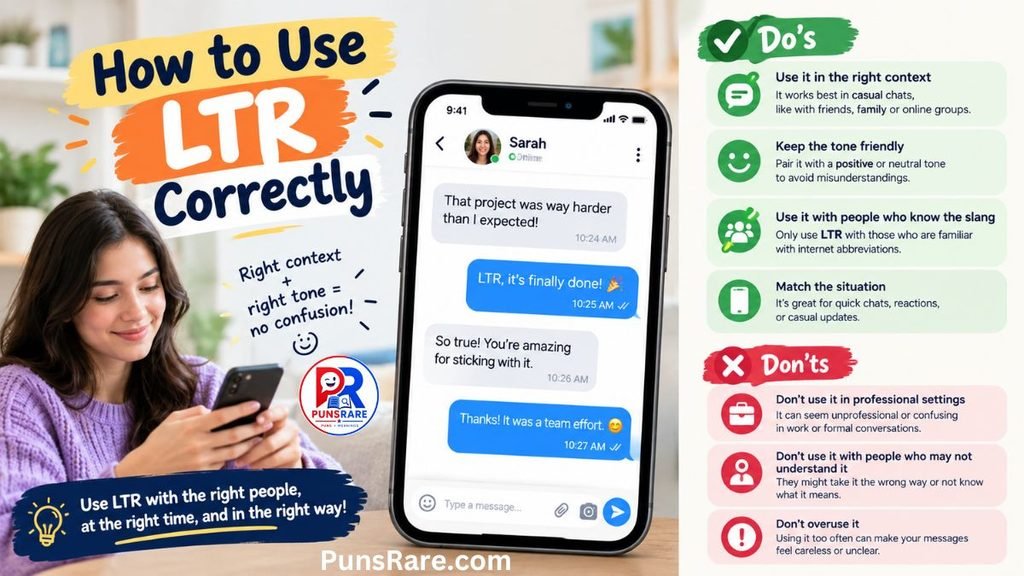
Using LTR well is less about grammar and more about making sure your meaning lands clearly.
Good Examples in Context
- “I’m on this app looking for an LTR, not just something casual.”
- “We’ve been official for six months now — definitely feels like an LTR.”
- “She’s not interested in dating apps for hookups, only for finding an LTR.”
- “After years of short flings, he finally wants an LTR.”
Tips for Using LTR
- Keep it in relationship contexts. Outside of dating conversations, the acronym can easily get misread, especially by people unfamiliar with dating slang.
- Pair it with a little context when texting someone who might not know internet abbreviations well, particularly older relatives or professional contacts.
- Avoid it in professional or formal writing entirely. It reads as too casual and, worse, ambiguous outside of texting culture.
- Don’t assume everyone knows the term. Dating slang shifts by age group and region, so not everyone will instantly recognize it.
When to Spell It Out Instead
Spell out “long-term relationship” in full when:
- Writing anything professional or formal
- Messaging someone significantly older or less familiar with texting shorthand
- The conversation topic isn’t already obviously about dating (avoiding confusion with the rental or design meanings)
- You’re writing for a broad audience, such as a blog post or article, where readers may not share the same slang background
Common Mistakes People Make with LTR
Assuming It Only Means One Thing
The single biggest mistake is treating LTR as if it has one universal meaning. As covered above, the correct definition always depends on context. Assuming a real estate listing is discussing a romantic relationship — or vice versa — leads to genuinely confusing misunderstandings.
Using It Without Context
Dropping LTR into a conversation with no surrounding context forces the other person to guess. A message that simply reads “thinking about an LTR” gives almost no information on its own. Adding even one clarifying detail avoids ambiguity entirely.
Overusing Abbreviations in Serious Conversations
Relationship conversations, especially ones about commitment and the future, deserve clarity. Overloading a serious conversation with acronyms like LTR, FWB, and STR back to back can make an emotionally important conversation feel flippant or unclear when it should be direct and thoughtful.
Frequently Asked Questions
What does LTR mean in text?
LTR meaning in text is usually “Long-Term Relationship,” used to describe a serious, committed partnership.
Is LTR the same as being exclusive?
Not always — LTR implies a lasting future together, while exclusive just means both people have stopped seeing others.
Why do people use LTR instead of writing it out on dating apps?
Dating apps have limited bio space, so LTR lets users signal serious dating intentions quickly without using up character limits.
Can LTR mean something unrelated to dating?
Yes — outside relationships, LTR commonly means Left to Right in design or Long-Term Rental in real estate listings.
Is it a good idea to ask someone what LTR means if I’m unsure?
Yes — asking directly is the safest way to avoid confusion, since LTR’s meaning always depends on context.
Final Thoughts
LTR is a small acronym that carries a surprising amount of meaning, and getting it right comes down to one simple habit: reading the context around it. In the vast majority of texts, dating profiles, and casual online chats, LTR means exactly what it sounds like — a long-term relationship built on real commitment, not a passing fling. But on a property listing or in a design conversation, that same set of letters means something else entirely.

Hi, I’m James Carter. I write about funny puns, word meanings, slang terms, phrases, and everyday expressions. Through PunsRare, I help readers discover new words, understand modern language, and enjoy the fun side of communication.






1 thought on “LTR Meaning in Text: A Simple Guide You Can Trust”